Small-scale forestry delivers big returns for Wilmot farmer
Posted 04 November 2026
Plantation Planning Species, sites and planting Managing trees Harvesting and selling wood On-farm benefits Economic benefits and markets
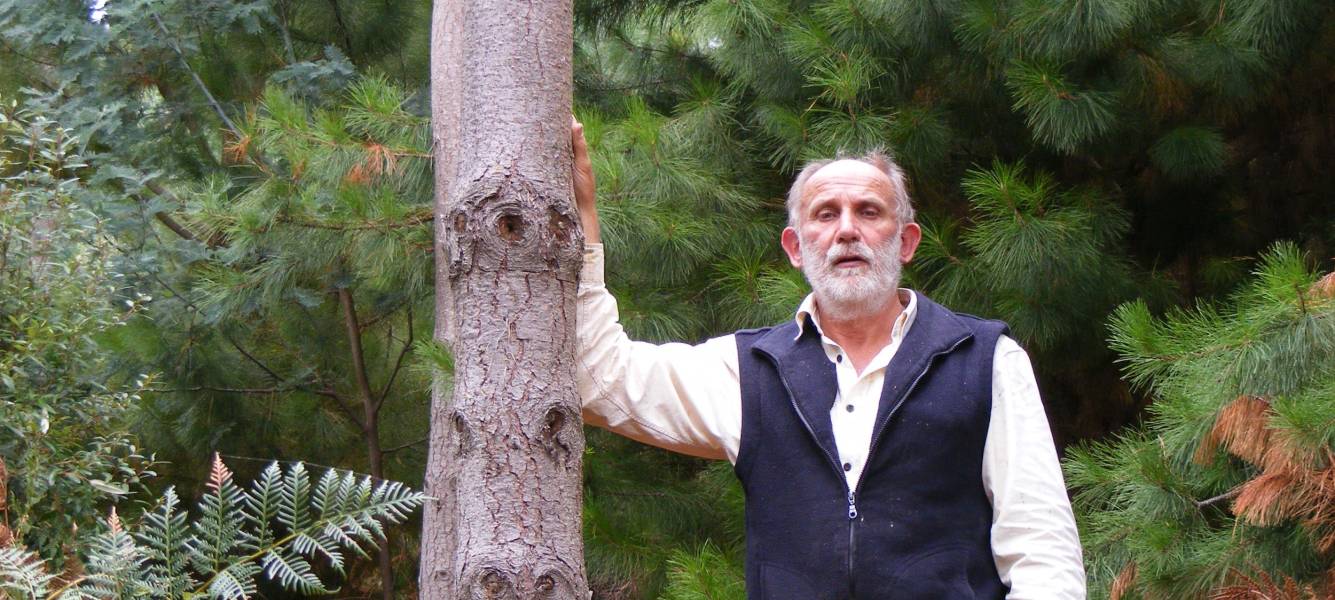
Farmer and long-time tree grower Roger Poltock from north west Tasmania has demonstrated how integrating trees into a farming enterprise can deliver environmental benefits, improve livestock welfare and generate strong financial returns.
Roger, a former Australian Forest Growers (AFG) National Tree Farmer of the Year has spent more than four decades integrating a productive agroforestry system across his farm.
Today, the approximately 95-hectare property supports a beef operation and approximately 26 hectares of forests, plantations, shelterbelts and environmental plantings.
For Roger, the decision to plant trees was driven by a motivation to make better use of the land while protecting his livestock from Tasmania's harsh weather.
Roger said he knows what it is like standing out in the cold in winter, so giving the cattle the protection of trees just makes sense.
"One cold wet windy spring morning in the late 80s, in the early stages of lambing, I had more dead than live lambs on the ground. At that point I resolved to start planting trees for shelter," he said.
Inspired by farm forestry field days and supported by a loan through Private Forests Tasmania, he established a 10-hectare Pinus radiata plantation in 1987. The plantation was eventually harvested, generating net returns of around $20,000 per hectare while continuing to deliver shelter benefits throughout their growing life.
These experiences have shaped Roger’s development of the property, with more trees strategically established on steep and inaccessible areas, alongside waterways and around dams, while more productive land remains in grazing.
Roger’s result from plantings is a farm that finishes 100 to 120 beef cattle each year while supporting high-value timber production.
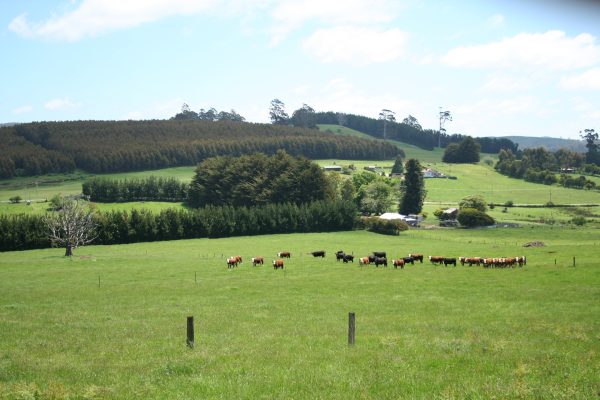
Image: Agroforestry on the Poltock property at Wilmot
One of the most exciting outcomes from Roger's farm forestry program has come from a modest 0.7-hectare planting of Leyland Cypress.
Leyland Cypress (Cupressocyparis leylandii) is a fast-growing hybrid between Monterey Cypress (Cupressus macrocarpa) and Alaska Cedar (Chamaecyparis nootkatensis), combining the durability and attractive timber qualities of both parent species. Originally developed in the United Kingdom, it has become popular with farm foresters because of its rapid growth, tolerance of wind exposure and ability to produce high-value appearance-grade timber.
The timber is lighter in colour than Macrocarpa and has an attractive grain, making it suitable for furniture, joinery, cabinetry, interior lining and specialty timber products. It also has natural durability, giving landowners an alternative to more traditional plantation species while targeting higher-value niche markets.
Roger said that the species ticked all the boxes.
Planted by Roger and his family in 1992, the stand was established beneath a nurse crop of Eucalyptus nitens and carefully managed for over three decades. The trees were pruned to six metres across three pruning cycles, producing high-quality clearwood sawlogs suitable for appearance-grade timber products.
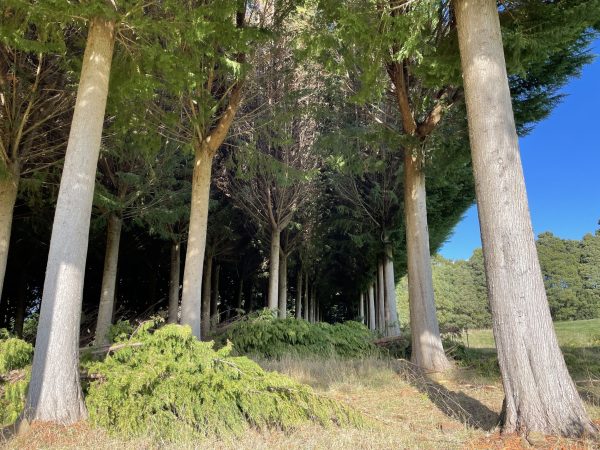
Image: Leyland Cypress plantation in 2026.
Earlier this year, a test harvest of a single pruned tree delivered outstanding results. The tree measured 50 centimetres diameter at breast height when harvested and was processed by Britton Brothers Veneers in Somerset and the Somerset Men's Shed. Feedback from timber processors was positive, with estimates suggesting the timber could be worth up to $4,000 per cubic metre.
A relatively small planting requiring limited land has the capacity to generate substantial returns while continuing to provide stock shelter, aesthetic value and environmental benefits throughout its growing life.
With around 100 additional Leyland Cypress trees now approaching harvest age, Roger is investigating selective harvesting and niche markets for the timber.
The success of the trial reinforces the value of growing specialty species alongside traditional farm enterprises, creating future income streams from land that also provides shelter and environmental benefits.
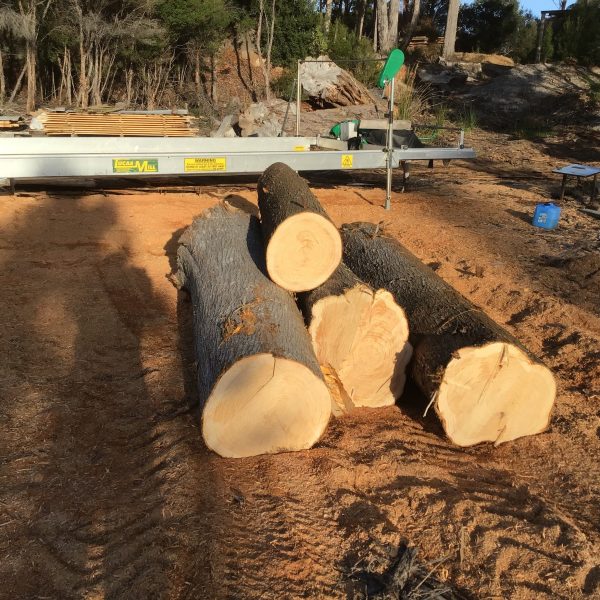
Image: Leyland Cypress milling in 2026
Roger credits this success to learning from other landholders and remaining open to new opportunities.
“It was through going to field days and learning from other farmers that I got the idea of growing different trees,” he said.
Roger’s willingness to learn and innovate has supported him to continually adapt his approach, identifying species and management techniques suited to his local conditions.
Today, his forested land includes 20.2 hectares of radiata pine plantation, blackwood plantings, native riparian vegetation, shelterbelts and specialty timber species, all integrated within a productive grazing enterprise.
Share this Article
Latest Articles
-
22 September 2026
Forest practices supervisors continue their learning in latest Forest Practices Authority training course
-

22 September 2026
Preparing for the upcoming bushfire season
-
15 September 2026
Managing native regrowth forests and plantations at Port Arthur
Archives
- ActivAcre hits milestone, calls for more farmers to get on board
- Napier's leading the way in sustainable forestry and carbon-neutral farming
- Sound science needed to assess carbon impacts of timber harvesting
- Newly appointed TFFPN Board of Directors
- Graduate Certificate of Forestry Scholarship
- Forestry Australia Mentoring Program 2025
- Forest Industry Roundtable planning for the long term
- Eagle Management Constraint Period extended
- Successful private native forest management celebrated
- $15 million investment in new ship loader to boost Bell Bay's forestry exports
- Standing with Tasmania's forestry industry: buy local
- TFPA: Tasmanian Freight Equalisation Scheme needs a ground-up review
- AFCA Gala Dinner celebrates industry excellence
- Fire permits now required Statewide
- Forest leaders hone skills in sustainable native regrowth management
- Tasmanian forests and the carbon market: Barriers and opportunities
- What the 2024-25 Tasmanian Budget means for forestry
- Spring is the time for fuel reduction burning
- Primed for Growth: A situation analysis of the Tasmanian Forest and Wood Products Sector
- Audit requirements cut for low-risk plantation projects
- Guidance and support for landowners after damaging winds
- Forestry Australia welcomes further definition of active forest management
- Farm & Forest Mapper Tool highlighted at Rural Youth Tasmania's Young Farmer of the Year competition
- Senate Select Committee inquiry into the Tasmanian Freight Equalisation Scheme
- Timberlink announces new wood composite products brand
- Newly developed protocol a vital tool for safeguarding forestry industry
- Red Hot Tips: Fire management for Tassie farmers
- Bioenergy: Fuelling industries with trees
- Harvesting trees: What you need to know
- Shelterbelts: How are they contributing to farm systems?
- Infill plantings and remnant vegetation: Why biodiversity depends on a thriving understory
- Plantation planning: The key to a successful plantation
- Exciting interactive forestry knowledge hub launched
- $450,000 farm forestry grant recipients revealed